Source Environmental Outdoor Artificial Plant for Garden, Patio, and Fence
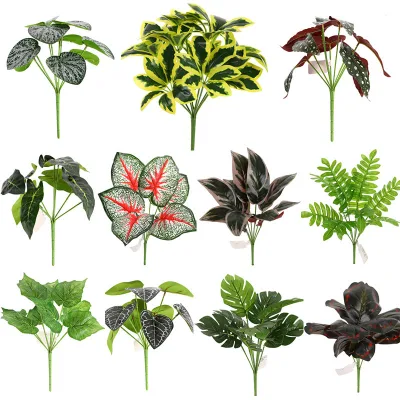
Find and compare 30 listings for Environmental Outdoor Artificial Plant options suitable for home and public spaces. These plastic-based decorative items offer waterproof durability and require no watering, making them ideal for low-maintenance landscaping and wall decoration projects.
Key considerations
Products List


Hot Sale Good Quality Simulation Plastic Tree Plant Artificial Potted Tree
$9.50 - $23.00
MOQ: 50 Pieces


Environmental Protection Outdoor Artificial Box Hedge Plants for Decor
$4.99 - $13.66
MOQ: 500 Square Meters


Simulation Plastic Artificial Plant in Pot Bonsai for Outdoor Decoration
$11.09 - $11.64
MOQ: 100 Pieces


Customizable Outdoor Indoor Artificial Plastic Plant for Wedding Decoration
$1.71 - $3.48
MOQ: 100 Pieces


Artificial Wall Panel Indoor Outdoor Decoration Fence Synthetic Grass Artificial Plant
$3.00 - $4.00
MOQ: 1000 Pieces


$4.90 - $5.10
MOQ: 1000 Square Meters



Comprehensive Sourcing Guide
Environmental Outdoor Artificial Plant Sourcing Guide
Sourcing environmental outdoor artificial plants requires a disciplined approach to distinguishing between decorative indoor accents and durable exterior installations. Buyers must recognize that "environmental" in this context often refers to aesthetic integration into green spaces rather than biodegradable or eco-certified materials. The supplied data indicates a market dominated by plastic-based solutions, specifically polyethylene (PE) and general plastic constructions, which offer longevity but lack organic decomposition. Procurement teams should prioritize products explicitly rated for outdoor exposure, verifying that the material composition resists UV degradation and weathering, as many listed items are optimized for home decoration rather than harsh environmental conditions.
The distinction between "plant" and "decorative plant artificial wall" is critical for project specification. While some listings describe the product type simply as "Plant" or "Potted Plant," others specify "Artificial Grass Fence" or "Decorative Plant Artificial Wall." This variance impacts installation methods and structural requirements. For instance, fence-style applications may utilize zip ties for mounting, whereas wall-mounted greenery might require different anchoring systems. Buyers must align their procurement specifications with the intended installation method, ensuring that the product’s physical form factor matches the architectural or landscape design intent, whether it is a vertical garden screen or a standalone potted element.
Product Scope and Observed Listing Signals
The observed market signals reveal a wide range of product configurations, from small potted units to large-scale fencing and wall coverings. Prices observed in the market range from $0.40 to $33.89, reflecting significant variation in size, material density, and complexity. Minimum Order Quantities (MOQs) typically start at 10 pieces but can extend to 1,000, with some suppliers offering lower MOQs if stock material is available. This flexibility allows buyers to sample products before committing to large volumes, which is essential for verifying the "Real Touch Nature" and visual quality of the artificial foliage before mass deployment.
Product attributes highlight a strong emphasis on customization and specific model numbers, such as SD11-2630 and SD11-262, indicating that suppliers offer standardized SKUs that can be tailored to specific project needs. The presence of "Customization: Available" and "Customized: Acceptable" suggests that buyers can request specific colors, sizes, or branding, although logo printing is often listed as "No" or "Without Logo Printing," implying that branding may be limited or require special negotiation. The origin of these products is predominantly China, with specific mentions of Hebei as a production hub, which is a known center for plastic manufacturing and artificial greenery production.
Technical Specifications to Verify
Technical verification must begin with material composition and surface treatment. The supplied facts indicate that products are primarily made of plastic, with specific mentions of PE (Polyethylene) as the plastic type. PE is generally preferred for outdoor artificial plants due to its superior UV resistance compared to other plastics like PVC. Buyers should verify the specific grade of PE used and confirm that the surface treatment, described as "Coated" or "Plastic," includes UV stabilizers to prevent fading and brittleness over time. The "Non-fire Retardant" attribute is a critical safety observation; buyers requiring fire-resistant materials for commercial or public spaces must explicitly request flame-retardant treatments, as standard offerings may not meet stringent fire codes.
Dimensional standards and packaging details are equally important for logistics and installation planning. Observed standards include dimensions such as 5050 cm and 40cm60cm, as well as height variations ranging from 0.8m to 2.2m for tree-like structures. These variations dictate the coverage area and structural support needed. Packaging is listed as "Box," "Woven Bag/Carton," or "Carton," which affects stacking efficiency and protection during transit. Buyers should confirm the exact packaging dimensions and weight to calculate freight costs accurately and ensure that the products arrive without damage, especially for delicate foliage components.
Compliance and Safety Documentation
Safety compliance is a primary concern for outdoor installations, particularly in public or commercial environments. The observed data notes that products are "Non-fire Retardant," which is a significant limitation for many building codes. Buyers must proactively request fire safety test reports, such as those aligned with EN 13501 or local equivalents, to verify if the product can be treated or if specific fire-retardant variants are available. Relying on the default "Non-fire Retardant" status for public spaces could lead to regulatory non-compliance and safety hazards.
Environmental claims require careful scrutiny. While one model number is associated with "100% Eco-Friendly," this is an isolated attribute and should not be generalized across the product line. Buyers should request specific environmental certifications, such as ISO 14001 for environmental management systems, to verify the supplier’s commitment to sustainable practices. However, the core product material is plastic, which is not biodegradable. Buyers should clarify end-of-life disposal options and avoid assuming that "eco-friendly" labels imply compostability or recyclability without documented proof from the supplier.
Cost Drivers and Commercial Terms
Cost structures are influenced by material quality, customization levels, and order volume. The wide price range of $0.40 to $33.89 suggests that basic, small-scale items are inexpensive, while larger, more complex installations like tall trees or extensive fencing panels command higher prices. Customization options, such as specific colors or sizes, may incur additional setup fees or higher unit costs. Buyers should negotiate based on volume tiers, leveraging the observed MOQ flexibility to secure better pricing for larger orders while using lower MOQs for sampling and initial pilot installations.
Delivery times and payment terms are key commercial factors. The observed delivery time is 10-20 days, which is relatively standard for manufactured goods but can vary based on customization and stock availability. Buyers should confirm lead times for rush orders and clarify whether expedited shipping is available at an additional cost. Payment terms should be structured to protect against quality issues, potentially using escrow services or milestone payments for large orders. Understanding the total landed cost, including freight and duties, is essential for accurate budgeting, especially when sourcing from international suppliers in China.
Supplier Qualification and Quality Control
Supplier qualification should focus on manufacturing capabilities and quality assurance processes. The observed data mentions "Machinery" and "Weave" as processing methods, indicating a mix of automated and manual production techniques. Buyers should verify the supplier’s production capacity and quality control protocols, including in-process inspections and final random inspections. The presence of "Sample: Avaliable" is a positive indicator, allowing buyers to physically assess the product’s texture, color accuracy, and structural integrity before placing a bulk order.
Quality control checks should include visual inspection for color consistency, tactile assessment for the "Real Touch Nature" claim, and structural testing for durability. Buyers should request photos or videos of the production process to verify the use of high-quality PE materials and proper coating techniques. Additionally, checking the supplier’s business license and export history can provide insights into their reliability and experience in international trade. Establishing a clear communication channel for addressing defects or discrepancies is crucial for maintaining quality standards throughout the procurement cycle.
Long-Term Procurement Checks
Long-term procurement success depends on establishing a robust supply chain relationship and continuous performance monitoring. Buyers should implement a system for tracking product performance in the field, including resistance to weathering, color fading, and structural stability over time. Regular feedback loops with the supplier can help identify areas for improvement and ensure that future orders meet evolving project requirements. Maintaining a buffer stock of critical components, such as replacement foliage or mounting hardware, can mitigate downtime in case of damage or loss.
Sustainability and regulatory changes should be monitored to ensure ongoing compliance. As environmental regulations tighten, buyers should stay informed about new standards for plastic products and fire safety. Proactively engaging with suppliers to explore more sustainable material options or improved fire-retardant treatments can enhance the product’s marketability and compliance status. Building a diversified supplier base can also reduce risk and provide flexibility in sourcing, ensuring that procurement operations remain resilient against supply chain disruptions.
FAQs
What is the material used for the artificial grass fence?
The product is made of plastic, specifically PE plastic type. This material ensures durability and allows for customization options. It is designed for home decoration and features a waterproof quality for outdoor use.
Can I get a customized version of this artificial plant?
Yes, customization is available and acceptable for this product. Buyers can request specific models like SD11-2630 or SD11-262. The product supports logo printing options, though some listings show no logo printing.
How is the artificial plant installed on a wall or fence?
Installation is performed using zip ties as the primary method. This process is handled by machinery to ensure consistency. The product is suitable for home decoration and requires no watering for maintenance.
What are the standard dimensions for the artificial plant models?
Standard dimensions vary by model, including sizes like 40cm by 60cm or 50 by 50. Some tree models range from 0.8 meters to 2.2 meters in height. Specific model numbers like 11-2630 define these exact specifications.
What is the minimum order quantity for purchasing this product?
The minimum order quantity can be as low as one piece or twenty pieces depending on stock. If stock material is available, the MOQ can be lower than standard requirements. This flexibility helps buyers test the product before bulk orders.
Where are these artificial plants manufactured and shipped from?
The products originate from China, specifically Hebei. They are packaged in boxes, woven bags, or cartons. The delivery time typically ranges from 10 to 20 days after the order is placed.
Is the artificial plant fire resistant for outdoor safety?
The product is listed as non-fire retardant in the provided specifications. It is designed for home and public decoration but does not claim fire resistance. Buyers should consider this attribute when selecting products for specific safety zones.